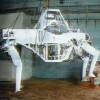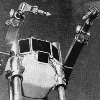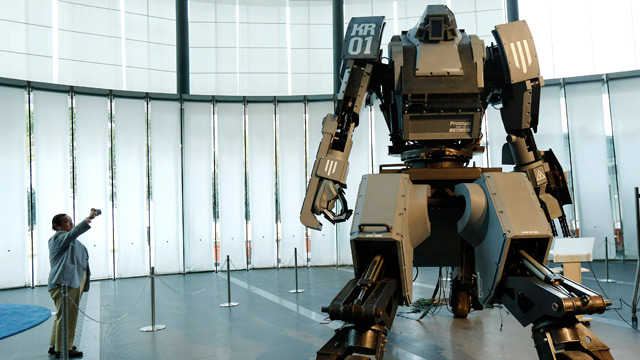
The advancement of technology brought new heights and new visions, and mecha went from an ill-defined niche to worldwide cultural hit. Soon, the commercial market would recognize this trend and hop onboard, finding a small but lucrative market in making them real.
2012 would see a product marketed as the world’s first “giant boarding robot,“ Kuratas Named after the mech’s creator, it rolls on 4 legs and was designed entirely for entertainment. For weapons, it was armed with water bottle rockets, fireworks, and dual BB guns activated by a camera detecting the pilot's smile.
Kuratas would even get a streamed event where it would fight an American robot on TV, giving even more pairs of eyes to the real life rise of the modern mecha. These stunts and more brought eyes to the business, and it would be mass produced for anyone to buy — that is, if they have enough money to afford the steep price tag of over 1 million dollars.
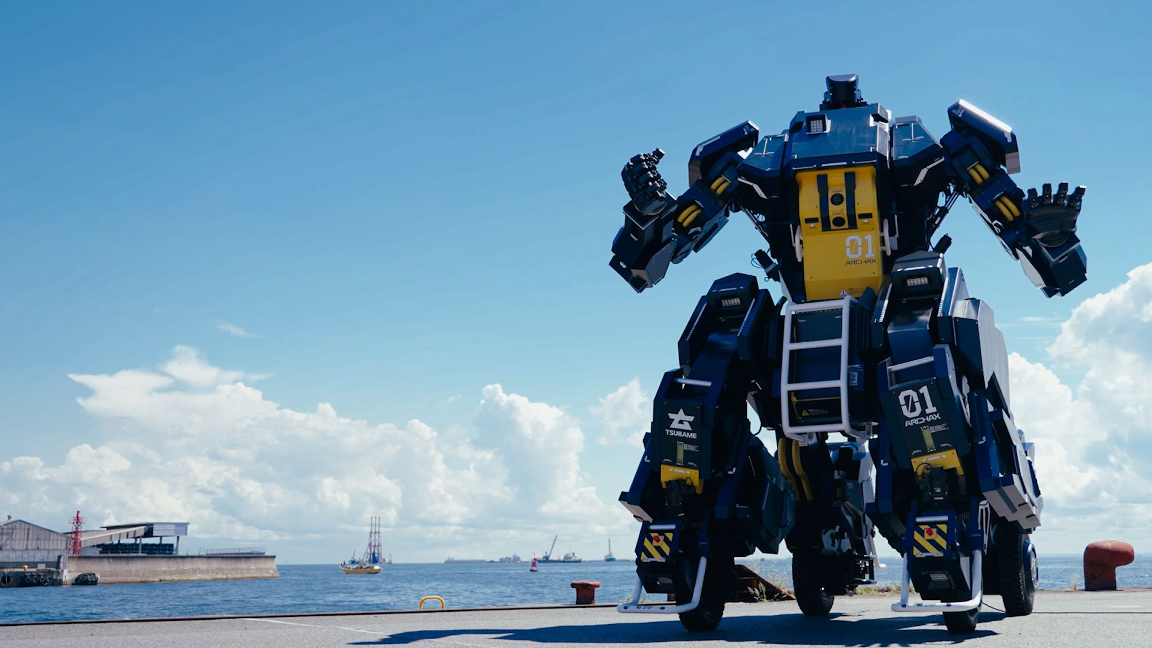
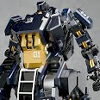
Kuratas proved there was a market for buying real mecha, and so it would soon see a spiritual successor. A second Japanese startup, Tsubame Industries, would enter the market with their iteration, called Archax. Sporting an advanced camera array and a sleek metallic paint job, it offers more improvements to its predecessor than just a fresh new look — improved steering, the ability to lift heavy objects with its arms, and a transforming mode for its legs which spreads them apart to increase speed.
Archax, too, will be sold at an extreme price tag, and while these mecha may seem little more than the world’s most expensive toys, the developments made by creating them may turn out important in the industrial field. Tsubame Industries believes that the next time humanity ventures to the moon, they may need a humanlike vehicle for general use.